How to Specify an RMG Crane for Tender or Procurement | Buyer’s Guide
Clear and complete technical specifications are the backbone of successful RMG crane procurement. Without precise details, buyers risk ordering cranes that do not meet operational requirements, leading to delays, costly modifications, or performance issues.
Introduction
Specifying a Rail Mounted Gantry (RMG) crane for tender or procurement involves more than just stating the lifting capacity or the crane’s span. If you only mention the basics, you risk receiving equipment that doesn’t fit your yard layout, struggles with peak loads, or fails to meet safety regulations. Procurement teams need to think through operational requirements, environmental conditions, and compliance standards before sending out a request for quotation (RFQ).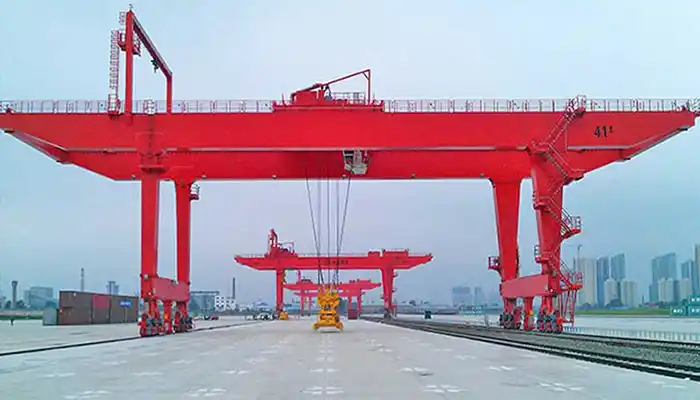
A well-drafted specification ensures that the crane will operate reliably, match your workflow, and minimize downtime. It also makes it easier to compare bids from different suppliers, avoiding confusion over capacities, speeds, or certifications. Here’s why every detail matters:
- Rated Capacity – Include not just the maximum load but also the weight of lifting attachments like spreaders or slings. This ensures motors and structures are sized correctly.
- Span and Lifting Height – Clearly define the area the crane must cover and the maximum height it needs to lift. Avoid surprises like clearance issues or incomplete coverage.
- Duty Class – Specify the intended operational frequency and intensity, such as A6, A7, or A8. This influences maintenance schedules and long-term reliability.
- Speeds for Hoist, Trolley, and Gantry – Define lifting and movement speeds to meet operational throughput without compromising safety.
- Power Supply Details – Specify voltage, phase, and frequency to ensure compatibility with your site’s electrical system.
- Control Type – Decide between cab operation, remote control, or semi-automatic systems based on safety, efficiency, and automation needs.
- Environmental Conditions – Consider temperature ranges, wind loads, and seismic zones that might impact structural integrity or performance.
- Required Certifications – Make clear any mandatory certifications such as CE, ISO, or third-party inspection to meet regulatory and quality standards.
Key Takeaways for Buyers
When specifying an RMG crane, every detail matters. Leaving out critical information can lead to mismatched equipment, operational delays, or unexpected costs. The following points highlight the most important parameters to include in your RFQ, and the questions they help answer:
Question solved: Can the crane lift the heaviest loads safely without overloading?
It’s not enough to list the maximum load alone. You need to factor in the weight of lifting attachments such as spreaders, slings, or clamps. This ensures the crane’s structure, motors, and safety systems are sized correctly. Overlooking attachments can result in underpowered cranes or excessive stress on the gantry and hoist.
- Define the maximum expected load with all lifting attachments included.
- Include occasional peak loads if your operations have irregular heavy lifts.
- Ensure a safety margin is applied to prevent structural overloads.
Question solved: Will the crane cover the full operational area and reach necessary heights?
Specifying the correct span and lifting height prevents clearance issues, stacking problems, or incomplete coverage. It also allows suppliers to calculate the correct beam size, trolley positioning, and gantry structure.
- Measure the maximum width and length of the yard or stacking area.
- Include the tallest expected lift plus any additional clearance for safety.
- Consider future expansions or changes in storage layout.
Question solved: How often and how intensively will the crane operate?
Duty class determines how frequently the crane will operate and how much load it can handle per cycle. Choosing the right class ensures longevity, prevents excessive wear, and reduces maintenance needs.
- Match duty class to expected daily cycles and load intensity.
- A higher duty class is required for high-frequency container handling.
- Lower classes may suffice for occasional or light-duty operations.
Question solved: Can the crane move loads efficiently to meet operational targets?
Specifying movement speeds ensures that the crane can handle the required throughput without creating bottlenecks. Each axis—hoist, trolley, gantry—impacts productivity differently.
- Specify lifting speed for maximum and typical loads.
- Define trolley and gantry speeds to match yard layout and operational needs.
- Consider acceleration and deceleration controls to protect cargo.
Question solved: Is the crane compatible with local electrical infrastructure?
Confirming voltage, frequency, phase, and type of power ensures smooth installation and avoids costly retrofits. Misalignment with local power standards can delay commissioning or damage electrical components.
- Include nominal voltage, frequency, and phase requirements.
- Specify if auxiliary power or backup supply is needed.
- Consider future upgrades to electrical systems for automation or higher capacity.
Question solved: Does the operation meet safety and efficiency requirements?
The choice of control affects operator safety, visibility, and productivity. It also determines how easily the crane can integrate with automation or remote monitoring systems.
- Decide between cab operation, remote control, or semi-automatic modes.
- Include visibility requirements and operator ergonomics.
- Clarify if integration with yard management systems is needed.
Question solved: Will the crane operate reliably in local conditions?
Environmental factors directly impact structural design, safety, and maintenance schedules. Ignoring extremes can shorten equipment life or cause operational disruptions.
- Include maximum and minimum operating temperatures.
- Specify wind speed limits and seismic considerations.
- Consider corrosive or dusty environments that may require protective coatings.
Question solved: Does the crane comply with legal and industry standards?
Certifications ensure that the crane meets safety, quality, and legal requirements. They also make inspections and approvals easier.
- Request CE, ISO, or other relevant international certifications.
- Include third-party inspection requirements if necessary.
- Clarify local regulatory compliance to avoid operational delays.
Practical Tips for Drafting Your RFQ
Drafting a Request for Quotation (RFQ) for an RMG crane is more than just providing basic numbers. The quality of information you give determines whether suppliers can propose cranes that truly match your yard, workflow, and operational needs. A well-prepared RFQ avoids misunderstandings, costly modifications, and delays during installation. Below are practical tips to ensure your RFQ is clear, complete, and useful.
Specifying the maximum lifting load is essential, but the details matter just as much. Suppliers need to know the total weight, including all lifting attachments such as spreaders, slings, clamps, or lifting beams. Without this, motors and structures may be undersized, which can cause early wear, unsafe operations, or expensive redesigns.
- Include both standard and peak loads to cover normal operations as well as occasional heavy lifts.
- Specify whether lifts involve single items or bundled loads, since multiple items can increase the effective weight and affect stability.
- Highlight irregularly shaped or asymmetrical loads. For example, an uneven steel slab or oversized container can impact trolley alignment and load distribution.
- Note operating cycles, i.e., how many lifts per hour or per shift, which helps vendors calculate hoist duty class.
Suppliers must understand the physical environment where the crane will operate. Detailed layout information allows them to design the gantry, trolley, and beam structure correctly and ensures smooth integration into your yard.
- Provide site drawings showing storage areas, track positions, stacking zones, and any obstructions such as lighting, piping, or overhead services.
- Specify horizontal and vertical clearance requirements to prevent interference during travel or lifting. For example, if containers are stacked higher than usual, the crane's lifting height must accommodate that.
- Include aisle widths and spacing between storage rows to ensure the crane can maneuver safely.
- Identify potential future expansions in the yard so the crane can adapt without major modifications.
Marketing brochures rarely provide the technical depth you need. Request detailed technical data sheets from each supplier so you can make apples-to-apples comparisons. These sheets should include not just capacities but also performance parameters, motor ratings, structural details, and safety systems.
- Ask for hoist, trolley, and gantry specifications, including maximum load, speed, and motor type.
- Include power requirements such as voltage, phase, and frequency.
- Verify structural design and materials to ensure durability under the expected duty class.
- Request safety and operational features, such as overload protection, limit switches, anti-sway systems, and emergency stop functions.
Operations rarely remain static. If your yard may grow or load requirements may increase, indicate this in your RFQ. Otherwise, you risk buying a crane that cannot adapt, leading to costly retrofits or replacements.
- Note future yard extensions, such as additional lanes or container stacks.
- Include anticipated increases in load capacity or handling frequency to ensure the crane structure and motors are scalable.
- Mention automation plans, for example, semi-automatic or remote operation integration, so the crane can be upgraded without major modifications.
A crane that's hard to inspect or maintain can quickly become a bottleneck. Including maintenance and inspection requirements upfront ensures the crane is accessible, safe, and durable over its service life.
- Specify inspection points for hoist, trolley, gantry, electrical systems, and structural connections.
- Provide access requirements such as walkways, platforms, or ladders for routine maintenance.
- Include recommended maintenance intervals and whether third-party inspections are required.
- Consider spare parts availability and replacement guidance to reduce downtime.
Providing detailed and accurate RFQs helps suppliers design cranes that meet your operational needs from the start. It reduces misunderstandings, ensures safety and efficiency, and allows procurement teams to compare quotes on the same basis. In short, the more information you give, the closer the crane will be to your actual requirements, saving time and money in the long run.
FAQ / Buyer Considerations
When buying or specifying an RMG crane, procurement teams often have the same set of practical questions. Understanding these concerns helps you draft better specifications and ensures suppliers deliver cranes that work reliably in your yard.
Many buyers worry about fully loaded containers or unusually heavy items during peak operations. Simply specifying the maximum load isn't enough—attachments like spreaders, slings, or clamps also add weight and can affect stability.
- Always include total lifting weight including attachments.
- Apply safety margins to cover occasional overloading scenarios.
- Confirm that hoist motors and gantry structure are designed for the highest expected loads, not just the average.
This approach avoids overloads, structural stress, and potential downtime.
Crane span determines how much of your yard can be covered in a single lift. Improper planning may leave dead zones, require repositioning cranes, or reduce efficiency.
- Measure storage row width and stacking areas.
- Plan for aisle clearances so the crane can travel without obstruction.
- Consider future expansions to avoid buying a crane that is too short for eventual layout changes.
Accurate span planning ensures the crane can reach every container stack safely and efficiently.
Duty class (A6, A7, A8, etc.) indicates how often the crane can lift loads and at what intensity. High-frequency operations, like busy container terminals, require a higher class to prevent excessive wear.
- Match duty class to expected cycles per shift.
- Factor in peak operational days and seasonal fluctuations.
- Remember that higher duty class affects hoist design, structural reinforcement, and maintenance intervals.
Selecting the correct class ensures reliability, reduces downtime, and extends the crane's service life.
Control type affects safety, operational efficiency, and future integration with automated systems.
- Cab operation provides full visibility but may limit efficiency if operators have to constantly move.
- Remote control increases flexibility and can improve safety by keeping operators away from hazardous zones.
- Semi-automatic systems may help standardize lifting procedures, reduce human error, and integrate with yard management systems.
Deciding early ensures the crane's control system aligns with your workflow and safety requirements.
Environmental conditions directly impact structural safety and operational reliability. Ignoring factors like wind, temperature extremes, or seismic activity can shorten crane life or cause accidents.
- Specify temperature ranges and wind speed limits.
- Consider seismic requirements if the yard is in a quake-prone area.
- Include corrosion-resistant coatings or special materials for harsh climates.
Addressing environmental conditions upfront prevents costly retrofits and unplanned downtime.
Certifications verify that the crane meets international or local safety and quality standards. They also simplify inspection approvals and compliance reporting.
- Request CE or ISO certifications to confirm design, quality, and manufacturing standards.
- Include third-party inspection reports to validate safety features and load tests.
- Ensure compliance with local regulations to avoid delays during commissioning.
Certifications provide peace of mind that the crane is safe, reliable, and legally compliant.
Conclusion
Drafting a complete and detailed specification for an RMG crane is the foundation of a successful procurement process. When you clearly define rated capacities, lifting heights, span, duty class, speeds, environmental conditions, and required certifications, you set the stage for a crane that fits your operational needs from day one.
Taking the time to provide this level of detail helps suppliers design or select equipment that integrates seamlessly into your yard or facility, reduces the risk of operational delays, and minimizes costly modifications or rework. It also makes comparing vendor proposals easier, as every bid is evaluated on the same clear criteria.
- Accurate specifications ensure safe handling of peak loads and prevent structural or motor overloads.
- Properly defined spans, clearances, and heights avoid coverage gaps and improve workflow efficiency.
- Choosing the right duty class and control system maximizes crane longevity and operator safety.
- Including environmental and certification requirements prevents performance issues and compliance problems.
Ultimately, investing time in detailed RMG crane specifications protects both your operations and your budget. It ensures that the crane delivered is not just “functional” but fully capable of supporting your workflow reliably, efficiently, and safely for years to come.